


Acute kidney injury (AKI) is a sudden loss of kidney function that can lead to long-term health risks, including chronic kidney disease (CKD), hypertension, and cardiovascular issues. Even after recovery, hidden kidney damage may persist, increasing the likelihood of future complications. Here’s what you need to know:
- AKI Risks: Survivors face a higher risk of CKD (up to 50%), cardiovascular events, and recurring AKI episodes.
- Monitoring: Regular tests like serum creatinine, eGFR, and urinalysis help track recovery and detect hidden damage.
- Warning Signs: Swelling, reduced urine output, fatigue, and high blood pressure may signal worsening kidney function.
- Prevention: A kidney-friendly diet, managing health conditions like diabetes and high blood pressure, and avoiding harmful medications are key.
- Specialized Care: Nephrology follow-ups within 30 days improve outcomes by addressing medication adjustments and secondary risks.
If you’ve had AKI, early action and consistent care are vital to protect your long-term kidney health.
Long-Term Health Risks and Outcomes After Acute Kidney Injury
Understanding Acute Kidney Injury and Its Long-Term Effects
What is Acute Kidney Injury?
Acute kidney injury (AKI) refers to a sudden loss of kidney function that occurs within hours or days, severely impairing the kidneys’ ability to filter waste from the blood. According to the KDIGO criteria, AKI is diagnosed when serum creatinine levels rise by 0.3 mg/dL or more within 48 hours or increase to 1.5 times the baseline level within seven days.
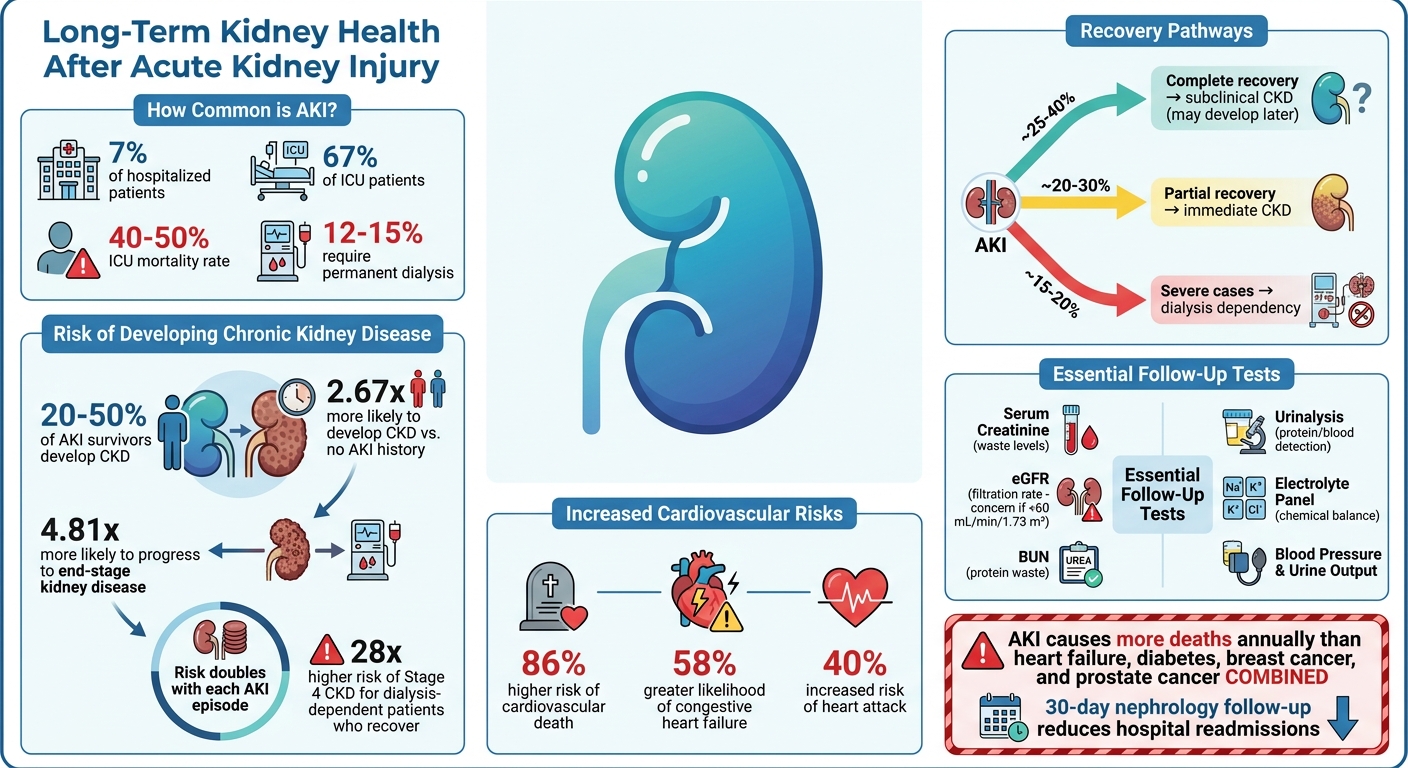
This condition is more common than many realize, affecting about 7% of hospitalized patients and as many as 67% of individuals in intensive care units.
AKI generally arises from one of three causes:
- Prerenal causes: These reduce blood flow to the kidneys and may include dehydration, severe bleeding, sepsis, or heart failure.
- Intrinsic causes: These involve direct damage to kidney tissue, often from medications like aminoglycosides, imaging contrast dyes, or conditions like acute tubular necrosis.
- Postrenal causes: These block the flow of urine due to issues like kidney stones, an enlarged prostate, or bladder tumors.
"Acute kidney injury (AKI), previously called acute renal failure (ARF), denotes a sudden and often reversible reduction in kidney function, as measured by glomerular filtration rate (GFR)." – Abhinav Goyal et al., StatPearls
The stakes are high: in-hospital mortality for ICU patients with AKI ranges from 40% to over 50%. Additionally, between 12% and 15% of AKI patients eventually require permanent dialysis.
While some patients recover, the acute damage often lays the groundwork for long-term complications, as explored in the next section.
How AKI Affects Long-Term Kidney Health
AKI doesn’t just pose an immediate threat – it can also set off a chain reaction that affects kidney health for years. The kidneys may recover differently after an AKI episode, and each recovery path carries its own risks. Studies show that 20% to 50% of AKI survivors go on to develop chronic kidney disease (CKD). Factors like the severity, duration, and recurrence of AKI episodes significantly influence whether long-term kidney issues arise.
Recovery can take several forms:
- Complete recovery: Patients may regain full kidney function but later develop subclinical CKD.
- Partial recovery: This often leads to immediate CKD.
- Progression to dialysis dependency: Severe cases may result in permanent reliance on dialysis.
A major concern is "maladaptive repair", where improper healing leads to scarring, tissue death, and permanent kidney damage. This scarring can double the risk of developing Stage 4 CKD after each AKI episode. For those who required dialysis during AKI but later regained independence from it, the risk of Stage 4 CKD is 28 times higher compared to patients with milder cases. Pre-existing CKD further amplifies the risk, with an adjusted hazard ratio of 41.2 for progressing to ESRD (end-stage renal disease).
The effects of AKI aren’t limited to the kidneys. It triggers systemic inflammation, which increases the risk of cardiovascular complications. Survivors face an 86% higher risk of cardiovascular-related death, a 58% greater likelihood of congestive heart failure, and a 40% increased risk of heart attack. This underscores the importance of ongoing monitoring even after apparent recovery.
"AKI is a paradigm of a localized damage triggering systemic inflammatory disease" – Ratliff et al.
Even when creatinine levels return to normal, underlying damage may persist for years. To address this, the medical community uses the term Acute Kidney Disease (AKD) to describe the critical 7 to 90-day period following AKI. During this time, ongoing damage can occur before transitioning to CKD. This window offers a vital opportunity to intervene and protect long-term kidney health.
sbb-itb-d9d90f9
Acute kidney injury but long term consequences!
Monitoring Kidney Function After Acute Kidney Injury
Keeping a close eye on kidney function after experiencing acute kidney injury (AKI) is essential, even if you feel perfectly fine. Regular follow-ups help ensure your kidneys are recovering properly and support long-term health. How often you need monitoring depends on how quickly your kidneys bounce back. For those with slower recovery, follow-ups at three weeks and three months are typically recommended. If your recovery reaches over 90% of baseline function, a single check-up at three months may be sufficient.
Recommended Tests and Screenings
Doctors rely on several tests to evaluate your kidney health after AKI. One of the most important is the serum creatinine test, which measures the level of waste in your blood. If creatinine levels are rising, it could mean your kidneys aren’t filtering properly. This test is also used to calculate your estimated glomerular filtration rate (eGFR), which considers factors like your age and sex to assess kidney function. If your eGFR drops below 60 mL/min/1.73 m², it’s a sign you may need to consult a nephrologist.
Other important tests include:
- Blood Urea Nitrogen (BUN): Evaluates how well your kidneys are clearing waste from protein breakdown.
- Urinalysis: Detects blood or protein in the urine, which can signal ongoing inflammation or damage.
- Electrolyte Panels: Check levels of sodium, potassium, and bicarbonate to spot chemical imbalances.
In addition to these, your care team will monitor daily urine output, blood pressure, and weight during each visit to catch early signs of fluid retention. In some cases, ultrasounds may be used to check for kidney stones or blockages.
Here’s a quick summary of the key tests:
| Test Type | What It Measures | Why It Matters After AKI |
|---|---|---|
| Serum Creatinine | Waste product levels in blood | Rising levels indicate poor filtration |
| eGFR | Kidney filtration rate | Shows recovery stage and chronic disease risk |
| BUN | Protein waste breakdown | High levels suggest reduced waste clearance |
| Urinalysis | Protein or blood in urine | Reveals ongoing inflammation or damage |
| Electrolyte Panel | Sodium, potassium, and bicarbonate balance | Detects chemical imbalances |
| Urine Output | Daily urine volume | Low output signals fluid retention |
If chronic kidney disease (CKD) develops after AKI, the frequency of follow-ups will depend on the CKD stage. On the other hand, if kidney function fully recovers with no lingering issues, some guidelines suggest additional monitoring may not be necessary.
Warning Signs of Declining Kidney Function
Regular monitoring helps catch problems early, but it’s also important to know the warning signs of worsening kidney function. Look out for swelling in your legs, feet, ankles, or around your eyes – this often points to fluid retention . Changes in urination, like producing less urine than usual or noticing brown-colored urine, should prompt immediate medical attention .
Other signs to watch for include:
- Fatigue, shortness of breath, or chest pressure: These may indicate fluid overload .
- Nausea and loss of appetite: Common with poor kidney function.
- Itchy skin: A possible sign of waste buildup in the blood.
- Neurological symptoms: Confusion, trouble concentrating, or seizures in severe cases .
Worsening high blood pressure is another red flag of declining kidney health. If you notice any of these symptoms, seek medical help right away. Also, review your medications with your doctor, especially if you’re taking NSAIDs like ibuprofen or naproxen, as these can reduce blood flow to the kidneys and potentially worsen damage .
Prevention Strategies for Long-Term Kidney Health
If you’ve experienced acute kidney injury (AKI), taking immediate steps to protect your kidneys is crucial. Around 25% of hospitalized patients worldwide develop AKI. Even with early treatment, the risk of progressing to chronic kidney disease (CKD) or end-stage renal disease (ESRD) remains elevated. By making targeted lifestyle changes, managing existing health conditions, and sticking to prescribed medications, you can reduce these risks and support your kidney health over the long term.
Lifestyle Changes for Kidney Health
A kidney-friendly lifestyle starts with your diet. Working with a registered dietitian can help you create a meal plan that minimizes stress on your kidneys. For most individuals with kidney concerns, keeping sodium intake under 2,300 milligrams daily is a key step. Staying properly hydrated is equally important, as it can prevent recurring AKI and aid in recovery.
You’ll also want to steer clear of substances that harm your kidneys. Nonsteroidal anti-inflammatory drugs (NSAIDs) like aspirin, ibuprofen, and naproxen can reduce blood flow to your kidneys and worsen damage. Always consult your doctor about safer alternatives for pain relief. Limiting alcohol and avoiding drug misuse are additional ways to protect your kidneys.
In some cases, your care team may introduce "sick day protocols" – temporary adjustments to medications like ACE inhibitors or ARBs during acute illnesses to reduce kidney strain. Beyond dietary and medication-related changes, managing chronic conditions plays a critical role in maintaining kidney function.
Managing Underlying Medical Conditions
Two of the biggest threats to kidney health are diabetes and high blood pressure. Both conditions can damage the small blood vessels in your kidneys, leading to further complications. For example, high blood sugar levels can narrow and clog these vessels over time, increasing the risk of kidney damage.
Keeping blood pressure and blood sugar levels in check is essential, especially during the recovery period after AKI. For most people with diabetes, maintaining blood pressure below 140/90 mm Hg is recommended to help protect kidney function. Achieving this often involves a combination of lifestyle changes – like cutting back on salt and alcohol, losing weight, and exercising regularly – paired with a treatment plan for managing blood sugar. This might include dietary adjustments, exercise, and medications such as insulin or oral agents.
Be mindful of "triple therapy", which involves using NSAIDs, ACE inhibitors or ARBs, and diuretics at the same time. This combination can significantly increase the risk of kidney injury. If you also have heart disease, managing your fluid levels becomes even more important, as reduced cardiac output can lead to decreased blood flow to your kidneys.
Following Your Medication Plan
Your medication plan is a cornerstone of recovery and long-term kidney health. Medications prescribed after AKI often aim to control blood pressure and balance electrolytes, which helps your kidneys heal and prevents additional damage.
ACE inhibitors (ending in –pril) and ARBs (ending in –sartan) are frequently used because they help reduce stress on your kidneys, particularly in people with diabetes or heart disease. These medications are vital in slowing CKD progression, so it’s essential to take them as directed. Never skip doses or stop taking them without consulting your nephrologist.
In some cases, your doctor might recommend supplements or additional medications to maintain proper sodium, potassium, and bicarbonate levels. Regular monitoring of your serum creatinine and estimated glomerular filtration rate (eGFR) will also help track your recovery and ensure your kidneys are functioning properly over time.
The Role of Nephrology Follow-Up and Specialized Care
Specialized nephrology follow-up plays a key role in ensuring sustained kidney recovery, especially after acute kidney injury (AKI).
Why Regular Nephrology Appointments Matter
Even when blood tests suggest your kidneys have recovered from AKI, underlying structural damage might still exist. This hidden damage, often caused by maladaptive repair (a scarring process), can silently impair kidney function over time. Regular nephrology appointments are essential to catch these changes early and adjust treatment before complications develop.
Studies show that scheduling a nephrology follow-up within 30 days can significantly reduce hospital readmissions during that same period. During these visits, nephrologists focus on several critical aspects of recovery:
- Medication adjustments: They review your prescriptions, ensuring dosages are appropriate for your kidney function and identifying any nephrotoxic drugs – like NSAIDs or certain antibiotics – that could hinder recovery.
- Monitoring secondary complications: Conditions such as hypertension and anemia are closely tracked, as they often accompany kidney damage.
- Cardiovascular health: AKI survivors are at a much higher risk for heart failure and other serious cardiovascular issues. Nephrologists address these risks alongside ongoing kidney care to prevent further complications.
This proactive and comprehensive approach helps reduce the chances of progressing to chronic kidney disease while also managing the cardiovascular risks that often follow kidney injuries.
How MyNephrologist Supports Long-Term Kidney Health

In Orange County, MyNephrologist offers specialized care tailored to long-term recovery after AKI. The practice uses advanced diagnostics to monitor key indicators, such as glomerular filtration rate (GFR) and urine albumin-to-creatinine ratio (uACR). These tests help track whether your kidneys are stabilizing or if there’s underlying damage requiring further intervention.
Their services go beyond diagnostics. Nutritional counseling is provided to design a kidney-friendly diet that reduces metabolic stress while balancing protein and electrolyte levels. Combined with medication management, blood pressure control, and regular monitoring, this approach supports sustained kidney function over time.
MyNephrologist is also affiliated with top hospitals across Orange County and works with most insurance plans, making it easier to access consistent, specialized care. Their integration of advanced diagnostics and personalized treatment plans ensures you have the resources needed for long-term kidney health.
Conclusion
Protecting long-term kidney health hinges on careful monitoring and prevention strategies, especially after an acute kidney injury (AKI). While blood test results may show improvement, hidden damage can persist, potentially leading to chronic kidney disease (CKD) or cardiovascular issues. Alarmingly, AKI contributes to more deaths annually than heart failure, diabetes, and breast and prostate cancer combined. Those who have experienced AKI are at a significantly higher risk – 2.67 times more likely to develop CKD and 4.81 times more likely to progress to end-stage kidney disease compared to individuals without a history of AKI. These statistics highlight the need for ongoing attention and care.
Taking a proactive stance is key. Regular monitoring through tests like serum creatinine, eGFR, and urine protein can catch early signs of kidney function decline. Coupled with lifestyle adjustments and specialized nephrology care, these measures can help ease the strain on recovering kidneys and prevent further damage.
Specialized follow-up is equally important. Research shows that AKI patients who regain kidney function after dialysis have a 30% lower risk of death compared to those who don’t recover. However, the outlook can be dire for those who fail to recover fully, with less than half surviving beyond a year.
If you’ve had AKI, don’t wait. Schedule follow-up tests, inform all your healthcare providers about your AKI history, and work closely with a nephrologist to ensure your recovery stays on track. Even if your kidneys seem fine now, complications can arise months or even years later. For tailored care and expert advice, consider reaching out to MyNephrologist to safeguard your kidney health for the long term.
FAQs
How long after AKI should I keep getting kidney tests?
It’s crucial to keep testing and monitoring kidney function well beyond the initial phase of acute kidney injury (AKI). Extended follow-up plays a key role in evaluating recovery and spotting any complications that might arise. By scheduling regular check-ups with your healthcare provider, you can help maintain kidney health and reduce the risk of future damage.
What medicines should I avoid after an AKI?
After experiencing an acute kidney injury (AKI), it’s important to steer clear of NSAIDs like ibuprofen and naproxen, as they can negatively affect kidney function. Additionally, drugs such as ACE inhibitors, ARBs, and potassium-sparing diuretics might need to be discontinued because they can increase the risk of hyperkalemia and reduce blood flow to the kidneys. Always check with your healthcare provider before making any adjustments to your medications.
When should I see a nephrologist after AKI?
If you’ve had an acute kidney injury (AKI), it’s important to see a nephrologist if you notice ongoing signs of kidney damage, changes in your urine output, or other related symptoms. This is particularly crucial during the recovery phase or if any complications arise. Routine follow-ups with a specialist can help keep track of your kidney health and reduce the risk of future problems.


